
Pacific Heights, Saskatoon: winter sun, snow and spring melt
Compared with 51 Saskatoon neighbourhoods, Pacific Heights gets about average December sun along its residential streets (median 1.3 h on December 21, city median 1.3 h), has about average snow on the ground in March, and about average spring ponding in a typical year (LandMood model, 2016–2025). What stands out is street direction: about 51% of its residential street length runs east–west (the 8th highest share among 51 Saskatoon neighbourhoods), so many homes on those streets face north or south.
Winter sun
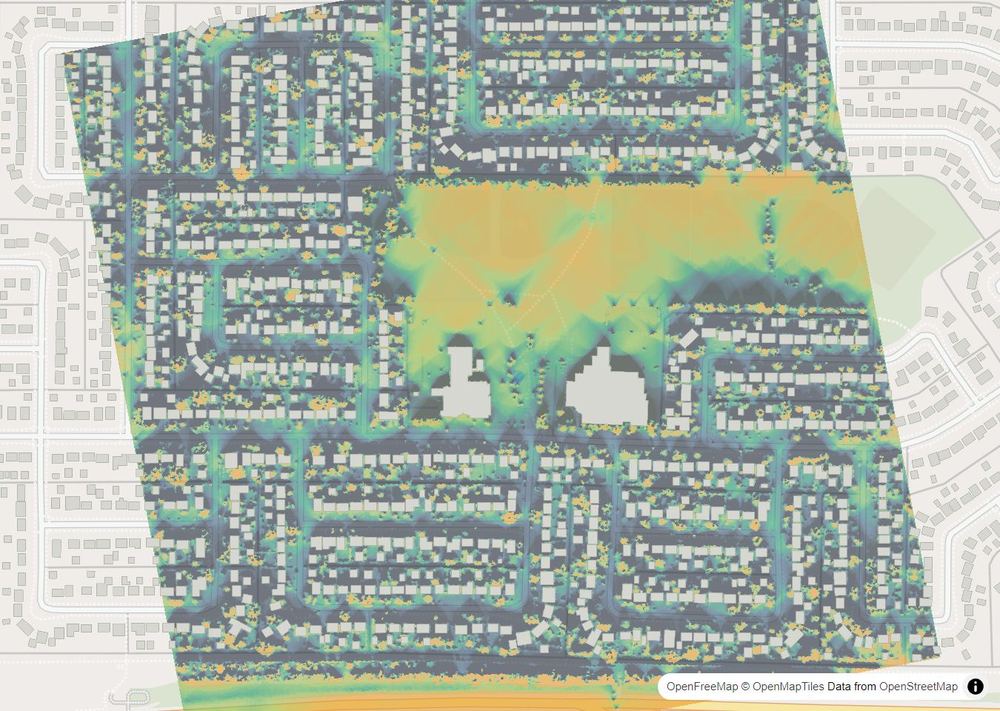
On December 21, the ground along Pacific Heights' residential streets gets a median of 1.3 h of direct sun, about the same as the 1.3 h median across Saskatoon's neighbourhoods.
On December 21, about 40% of Pacific Heights' street-side ground gets under half an hour of direct sun (city median 39%).
Which way homes face
Streets here run in mixed directions (about 51% east–west, 36% north–south, the rest diagonal or curved), so homes face every way; which side gets the winter sun depends on the street.
Snow and spring melt
In March, about 45% of Pacific Heights' street-side ground still holds 20 cm of snow or more in a typical year (city median 50%).
During spring melt, the model expects water to pool (1 cm or more) on about 10% of the street-side and open ground in Pacific Heights (city median 9%).
Buying a home in Pacific Heights: what winter looks like
If you are looking at homes in Pacific Heights or thinking of living there, expect about as much winter sun as the typical Saskatoon neighbourhood on the ground along its streets: a median of 1.3 h of direct sun on December 21, against 1.3 h for the city.
Streets in Pacific Heights run in mixed directions, so homes face every way. Which side of a home gets the winter sun, the front with the driveway or the back yard, depends on the street it is on.
Pacific Heights has about the typical amount of snow on the ground in March and about the typical amount of spring ponding in our model. Wherever a driveway or walk sits in shade, snow tends to stay longer, and melt water that runs across it in the day can refreeze at night.
At a viewing, check:
- which way the front of the house faces;
- whether the driveway and front steps are in shade around midday;
- where snow has piled up and where melt water has stood or refrozen;
- where the downspouts empty and whether the yard slopes away from the house.
The full list is in buying a house in Saskatoon in winter.
Within Pacific Heights, two homes on the same street can differ more than Pacific Heights differs from the rest of Saskatoon. Put the home you are looking at on the map to see its own front yard, back yard and driveway.
Compared with its neighbours
Along its residential streets Pacific Heights gets 1.5 h less direct sun on December 21 than neighbouring Parkridge (1.3 h against 2.8 h).
| Neighbourhood | Sun, Dec 21 (median) | 20 cm+ snow in March | Spring ponding |
|---|---|---|---|
| Pacific Heights | 1.3 h | 45% | 10% |
| Confederation Park | 1.7 h | 45% | 10% |
| Parkridge | 2.8 h | 29% | 14% |
Compared with the rest of Saskatoon
| Measure | Pacific Heights | Saskatoon median | Rank |
|---|---|---|---|
| Direct sun on Dec 21, street-side ground (median) | 1.3 h | 1.3 h | 28th of 51 |
| Street-side ground with under 30 min of sun on Dec 21 | 40% | 39% | 24th of 51 |
| Street-side ground with 20 cm+ of snow in March | 45% | 50% | 34th of 51 |
| Ground where melt water pools in spring (1 cm+) | 10% | 9% | 22nd of 51 |
| Residential streets running east–west | 51% | 39% | 8th of 51 |
Rank 1 is the highest value among 51 residential neighbourhoods with enough data. See which ones get the most and least December sun in the Saskatoon winter sun ranking.
How these numbers are made
LandMood follows the sun hour by hour over 1-metre public lidar of the real houses and trees (Natural Resources Canada) with ten years of weather (2016–2025). For this page we sampled the ground along residential streets (boulevards, front yards and driveways as a band, never a single home) and open ground away from buildings, across the whole neighbourhood. Snow and water are modelled tendencies shown as shares and bands, not measurements.
Questions people ask
How much winter sun does Pacific Heights, Saskatoon get?
On December 21 the ground along residential streets in Pacific Heights gets a median of 1.3 h of direct sun in LandMood's model, against 1.3 h for the median neighbourhood in Saskatoon. Individual homes vary with the direction they face, trees and neighbouring houses.
Do homes in Pacific Heights face north or south?
Streets here run in mixed directions (about 51% east–west, 36% north–south, the rest diagonal or curved), so homes face every way; which side gets the winter sun depends on the street. Check a specific home on the map before you decide.
What should I check when buying a home in Pacific Heights in winter?
Check which way the front of the house faces, whether the driveway and front steps are in shade around midday, where snow piles up and melt water stands or refreezes, and where the downspouts empty. In LandMood's model the ground along Pacific Heights' residential streets gets a median of 1.3 h of direct sun on December 21 (city median 1.3 h), but two homes on the same street can differ more than that, so check the specific home on the map.
Does snow last long in Pacific Heights?
In March, about 45% of Pacific Heights' street-side ground still holds 20 cm of snow or more in a typical year (city median 50%). Shaded ground on the north side of houses and trees keeps snow longest.